
You found the right house in Baton Rouge, your offer was accepted, and then your insurance agent says the carrier needs a “4-point inspection” before they’ll write the policy. Or maybe you’ve owned your home for years and the request showed up with your renewal paperwork. Either way, it’s a common ask in South Louisiana, and it’s nothing to panic about once you know what it is.
Here’s what a 4-point insurance inspection covers, how it differs from a full home inspection, and what you can do ahead of time so it goes smoothly.
What Is a 4-Point Inspection?
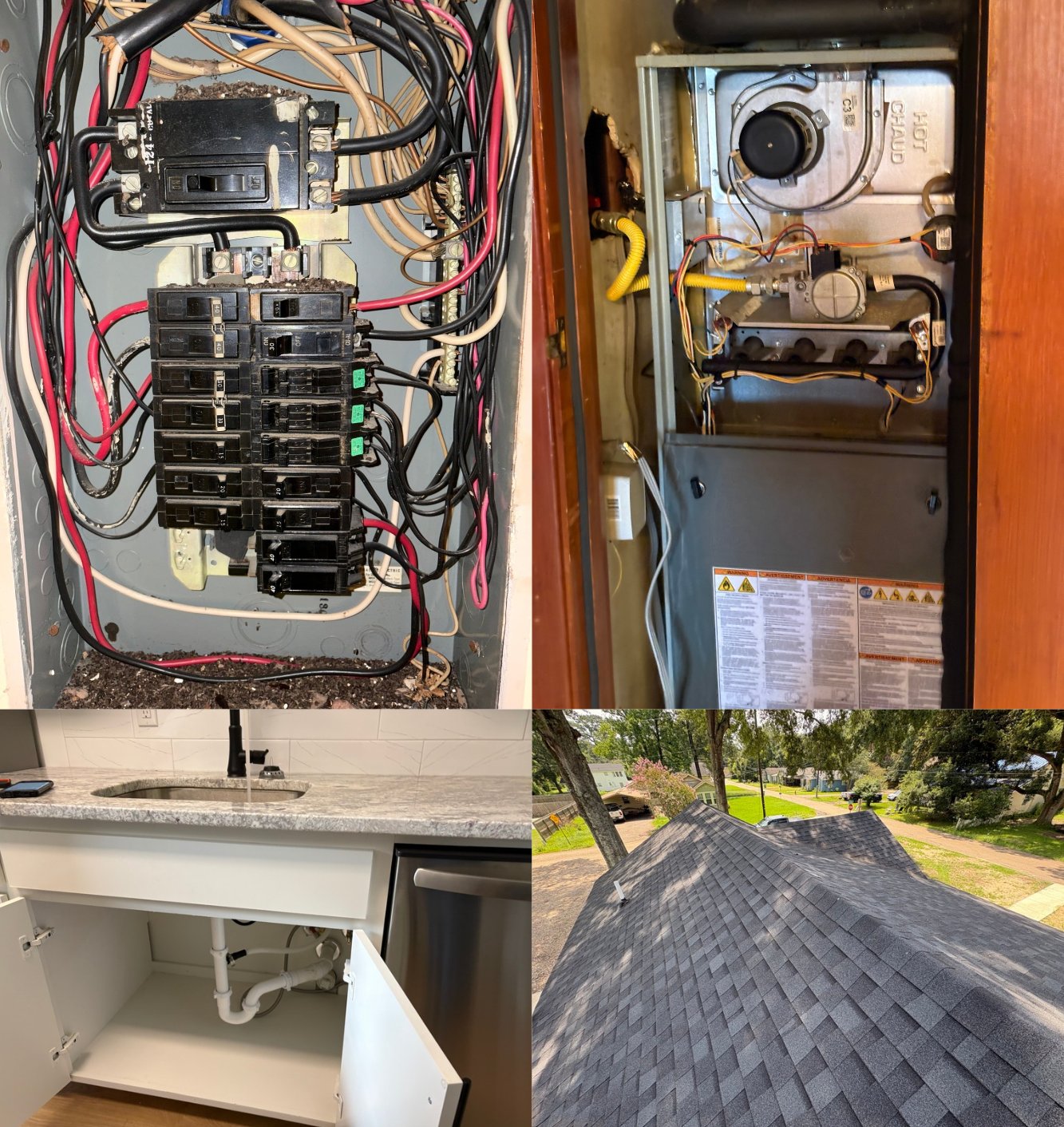
A 4-point inspection is a focused look at the four systems insurers worry about most: the roof, the electrical system, the plumbing, and the HVAC (heating and air conditioning). Insurance companies use it to judge the age and condition of those systems before they issue or renew a homeowners policy.
Requests are most common on older homes, but the exact rules vary by insurance company. Some carriers ask based on the age of the house, some based on the age of the roof, and some after a prior claim or visible wear. Your agent can tell you exactly what your carrier wants and which form they accept.
What We Check on Each of the Four Systems
We document each system with photos and notes so the underwriter can see what we saw.
- Roof: covering type, approximate age, overall condition, and visible damage such as missing or lifted shingles, leaks, or deterioration. A worn-out or leaking roof is one of the biggest red flags for insurers.
- Electrical: the main panel and wiring type, with attention to outdated or unsafe wiring such as knob-and-tube or older aluminum branch wiring, plus obvious hazards like open junctions or missing covers.
- Plumbing: supply and drain piping materials, the water heater, and signs of active leaks or corrosion. Some materials, like polybutylene supply piping, can make it harder to get coverage.
- HVAC: whether the heating and cooling equipment operates, its approximate age, and its general condition.

4-Point Inspection vs. Full Home Inspection
These two get confused a lot, so here’s the short version:
- Purpose: a 4-point is for insurance eligibility. A full home inspection is for your own due diligence as a buyer or owner.
- Scope: a 4-point covers four systems. A full inspection covers the whole house, from the foundation and grading to the attic, windows, doors, and appliances.
- Report: a 4-point is usually a standardized insurer form. A full inspection is a detailed narrative report with photos and recommendations.
If you’re buying, a 4-point is not a substitute for a full home inspection. It won’t tell you about drainage problems, wood-destroying insect damage, foundation movement, or moisture hiding behind a wall. Every standard home inspection we perform includes thermal imaging and moisture testing, which is exactly the kind of detail a 4-point form doesn’t capture.
How to Prepare for Your 4-Point Inspection
A little prep keeps the visit quick and the report accurate:
- Find your paperwork. Receipts, permits, or contractor invoices for a roof replacement, panel upgrade, re-pipe, or new HVAC system help confirm the age of each system.
- Clear access to the electrical panel. Move anything stacked in front of it, and make sure the breakers are labeled.
- Clear access to the water heater and HVAC equipment, including the attic hatch if the air handler is up there.
- Make sure utilities are on. We need power and water to see the systems working, which matters most on vacant homes and estate sales.
- Fix the easy stuff first. A dripping supply line or a missing panel cover is a simple repair before the inspection and a harder conversation with an underwriter after it.
What If Something Gets Flagged?
A 4-point inspection doesn’t have a simple pass or fail grade. We report what we observe, and the insurance company decides what to do with it. Depending on the carrier, an issue might lead to a request for repairs before the policy is bound, limited coverage, or a declined application. If you’re mid-purchase, that’s important information to have before closing, so talk with your agent and your real estate professional early.
A Note on FORTIFIED Roofs in Louisiana
Roof condition is a big deal to insurers here, and Louisiana has been putting money behind stronger roofs. The state’s Fortify Homes Program, run by the Louisiana Department of Insurance, offers grants of up to $10,000 toward a roof built to the IBHS FORTIFIED standard. Under La. R.S. 22:1483, insurers offer a premium discount for FORTIFIED roofs, and the Department of Insurance has told carriers that the IBHS FORTIFIED certificate is the only documentation needed to qualify for that discount. It’s also separate from wind mitigation discounts. If you’re replacing a roof anyway, ask your agent and roofer about it.
This article is general information, not legal or insurance advice. Requirements, forms, and discounts vary by insurance company and can change. Check with your insurance agent or the Louisiana Department of Insurance for your situation.
Schedule a 4-Point Inspection in the Baton Rouge Area
Abacus Inspections is a licensed Louisiana home inspector (LHI #20048) and veteran-owned, with a background as a Navy Seabee builder, licensed contractor, and construction manager. We perform 4-point insurance inspections, roofing inspections, and full home inspections across Baton Rouge, Denham Springs, Walker, Watson, Central, Zachary, Gonzales, Prairieville, and the surrounding parishes.
See everything we offer on our services page, book your inspection online, or call us at 225-534-9359.